Welcome to the monthly update of the QuantMonitor Live Portfolio. This is a real-money portfolio where we publish results transparently and, just as importantly, we share the “why” behind portfolio decisions — including changes that don’t always look pretty in the short term.
This month I made a meaningful adjustment to the portfolio structure. Until now, the portfolio was heavily dominated by one component — the XAUUSD strategy. With the current account size and the position sizing already used on gold, the only practical way to reduce concentration was to increase exposure (lot sizes) on the other tickers. That means higher diversification by instruments, but also higher overall portfolio volatility.

Live Portfolio Snapshot (as of Jan 29, 2026)
- Balance: 1,185.37
- Equity: 1,205.17
- Net Profit (to date): +185.37
- Max Drawdown (historical): 5.04%
- Profit Factor: 1.15
- Max Deposit Load: 7.76%
- Trading activity: ~9 trades/week
- Average hold time: ~11h 30m
Performance Overview
2025 results (Apr–Dec):
- Total P/L: +277.03
- Strong months: May (+96.01), Oct (+86.54), Jul (+45.79), Nov (+41.19)
- Weakest month: Sep (-62.98)
2026 YTD (January, as of Jan 29):
- P/L: -91.66
Key contributors by symbol (Net Profit)
- XAUUSD: +226.71
- DE40Cash: +81.49
- US30Cash: +37.67
- EURJPY: +30.29
- GBPJPY: +16.86
Why the Portfolio Volatility Will Increase from Here
In an ideal world, you set a portfolio allocation on day one, launch it, and leave it untouched. That approach usually produces the cleanest long-term results.
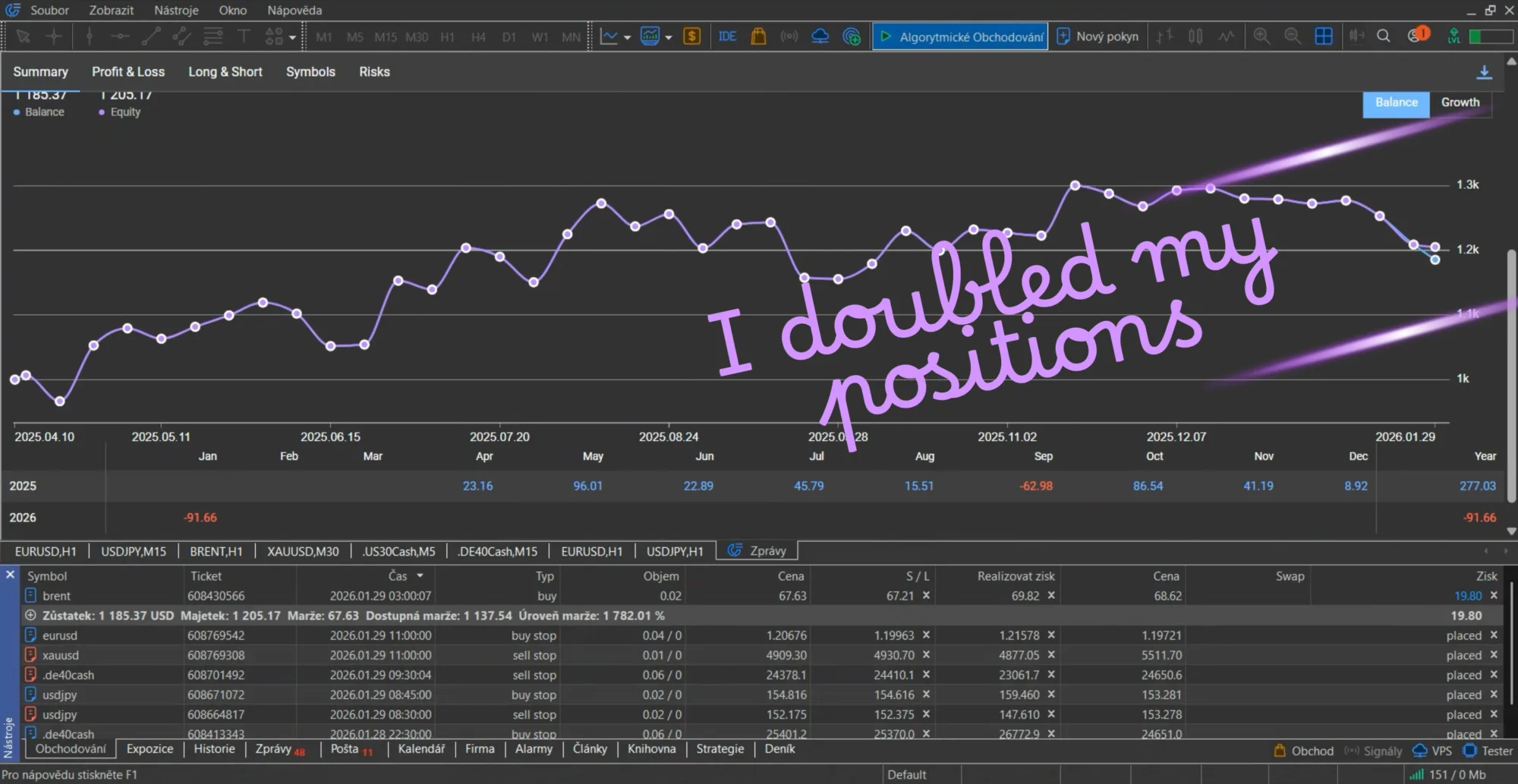
However, I’m still iterating and improving this live portfolio in public. The benefit for you is simple: you can see the real impact of allocation changes on the equity curve — not in backtests, but in live trading.
Because I raised position sizes on the non-gold components, the equity curve will naturally become more volatile. In practical terms:
- Previously expected drawdown: ~10%
- New expected drawdown after rebalancing: ~20%
This is not “more risk for fun” — it’s the trade-off for reducing over-reliance on one dominant strategy and building a more balanced portfolio across instruments.
Conclusion
January is currently negative, and that’s exactly the kind of period where portfolio decisions get tested. The portfolio is transitioning from a gold-dominated structure to a broader, more evenly weighted multi-market portfolio. That transition can create short-term pain — but the long-term goal is a healthier distribution of returns and less single-strategy dependency.
As always: this is a live account, real trading involves risk, and this update is shared for transparency and educational value — not as financial advice.
See you in the next monthly update.