I have recently added a new set of tools to QuantMonitor focused on real-world live trading monitoring. The goal was not to create just another visual MT5 panel, but to build a practical working framework that connects backtest data, live results, portfolio-level visualization, and current market regimes into one coherent system.
The idea is simple: a trader should always know how the strategy behaved in the backtest, how it behaves now in live trading, how backtest and live performance connect inside one continuous database, what type of market the strategy is currently trading in, and whether current conditions are favorable or unfavorable for that strategy.
This makes QuantMonitor much more than a performance panel. It becomes a framework for understanding why a strategy is making money or losing money, which is one of the most important parts of serious live trading.
What the new QuantMonitor package includes
The new release is built around three main components:
- QuantMonitor MT5 Monitoring
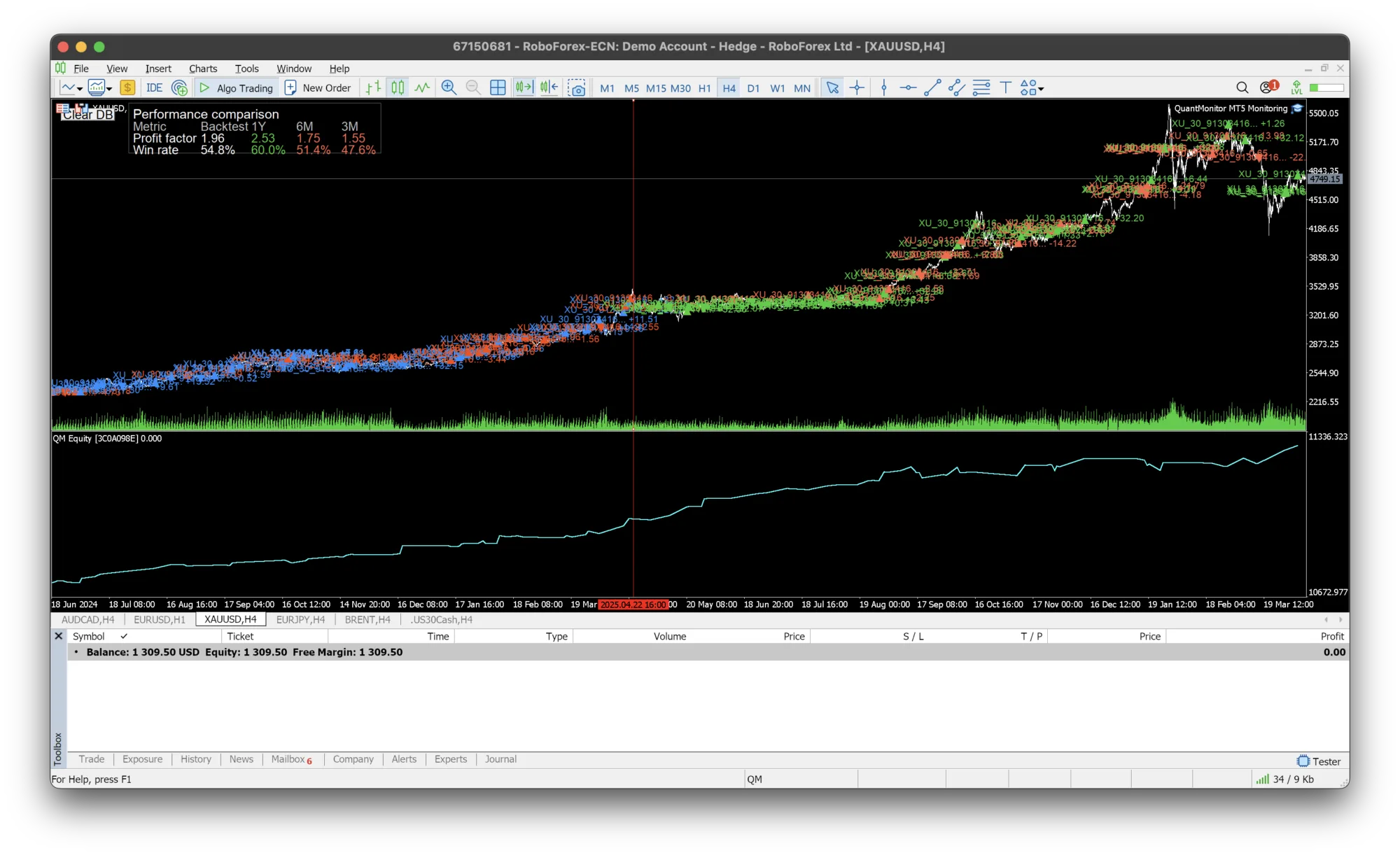
The main monitoring EA loads data from Strategy Tester HTML exports, merges them with live MT5 history, and automatically creates its own database for each strategy instance. This produces a single continuous backtest + live timeline that can then be used for statistics, equity tracking, portfolio visualization, and ongoing real-time analysis.
- QuantMonitor Portfolio Overlay
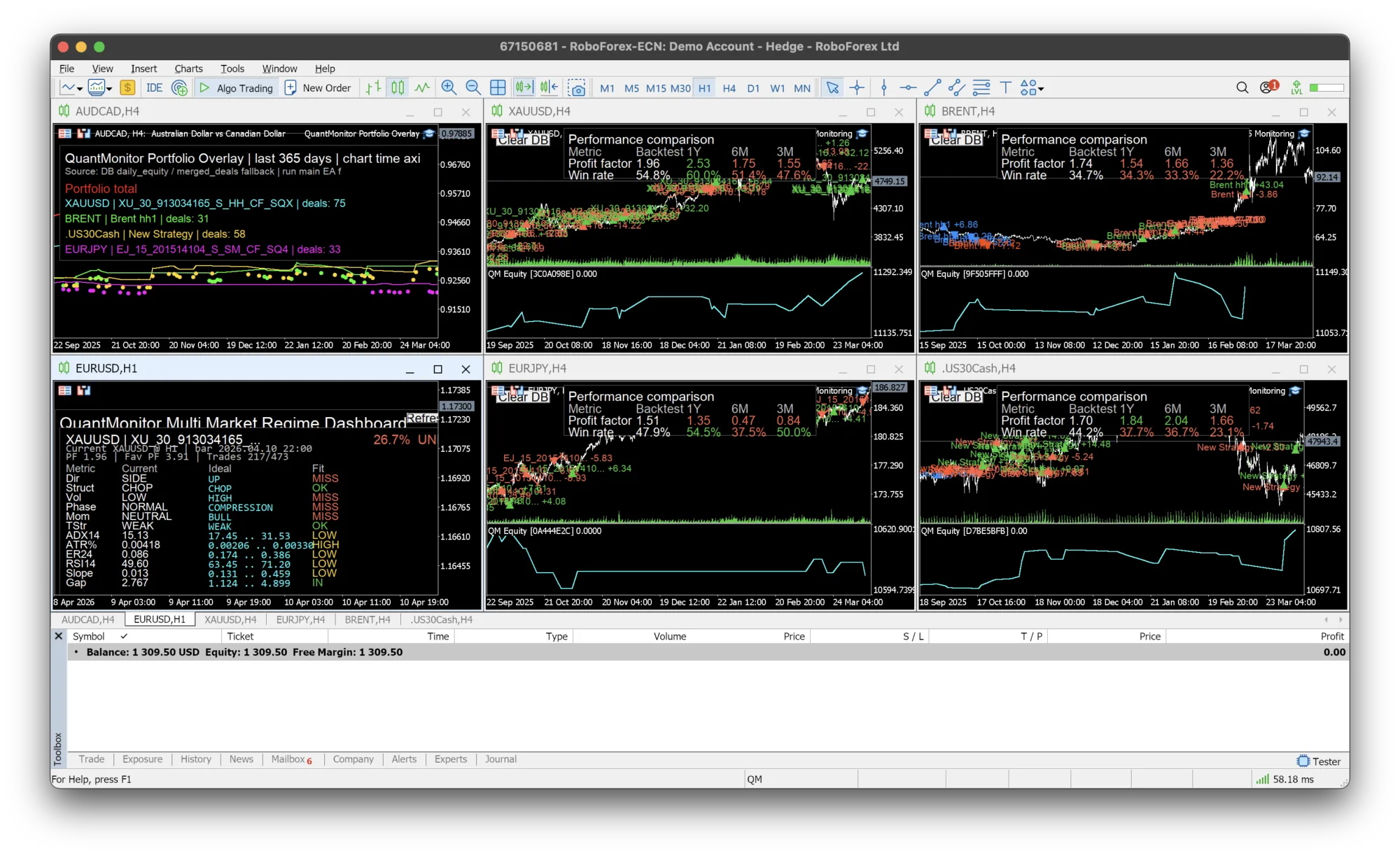
The portfolio overlay displays multiple strategies in one chart and gives a fast overview of which systems are driving portfolio growth, how they interact with one another, and whether diversification is actually working in practice.
- QuantMonitor Multi Market Regime Dashboard
The market regime dashboard compares the current market state with the historically ideal environment for each strategy. This makes it possible to quickly see whether a strategy is currently trading in a favorable, neutral, or unfavorable regime.
Why this approach matters
Most traders already have a lot of data. What they usually do not have is a strong framework for reading that data correctly. A backtest alone is not enough. A live result without context is not enough either. And an equity curve by itself does not explain whether the strategy is currently operating inside the type of market it was built for.
That is exactly why this framework was created. It is built on the idea that a trader should always understand how the strategy works, what kind of market it performs best in, how current live behavior compares to its historical profile, and why it is currently performing well or poorly.
In other words, this is not about blindly running EAs. It is about managing trading systems with awareness.
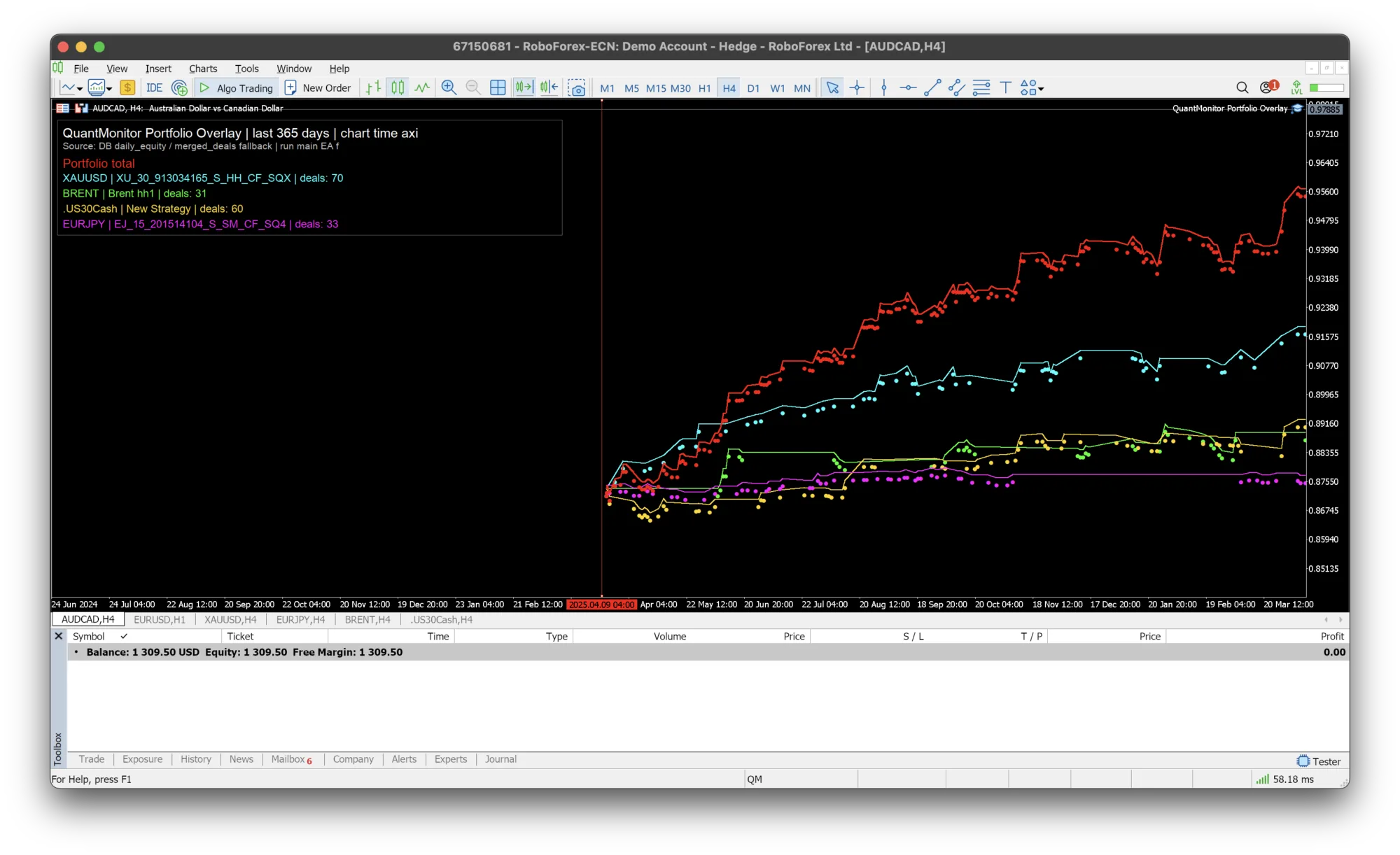
What makes the system practical
One of the biggest advantages is that the user does not need to manually build databases. Once the EA is launched, it loads backtest data from HTML exports, pulls live history directly from MT5, and creates the database automatically. This makes the workflow simple while still providing a very strong analytical backbone.
The only layer that remains intentionally individual is the market regime CSV profile. That is by design. The technical infrastructure can be shared, while the specific regime intelligence that defines when a strategy works best can remain personal and customizable.
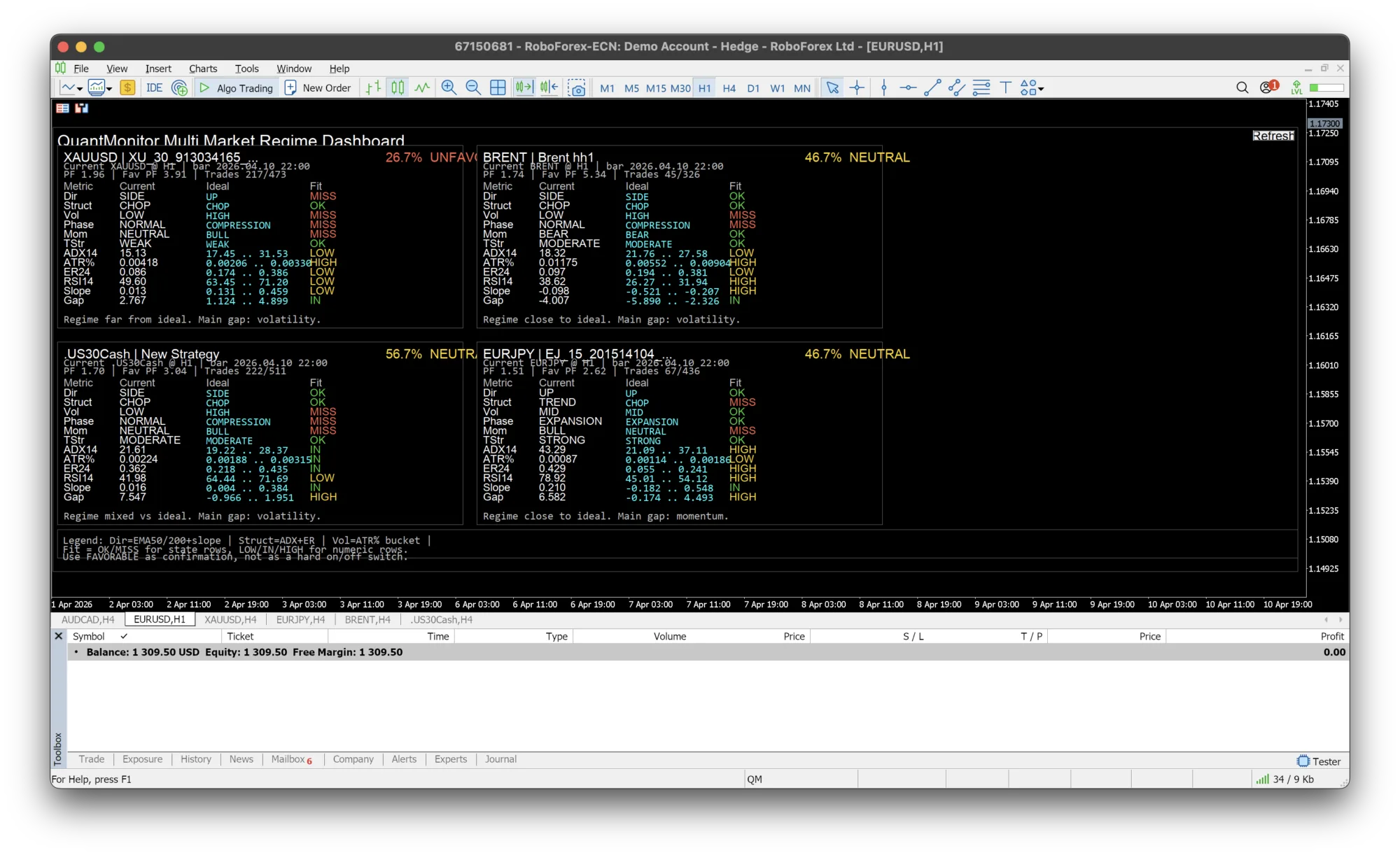
What is included below this post
Below this article you will find:
- a detailed user guide
- compiled EA files ready for use
- the full QuantMonitor tool package for practical live monitoring
This means you can immediately test the workflow inside MT5, connect your own backtests and live trades, and start building your own monitoring environment around your systems.
What is available in the Premium section
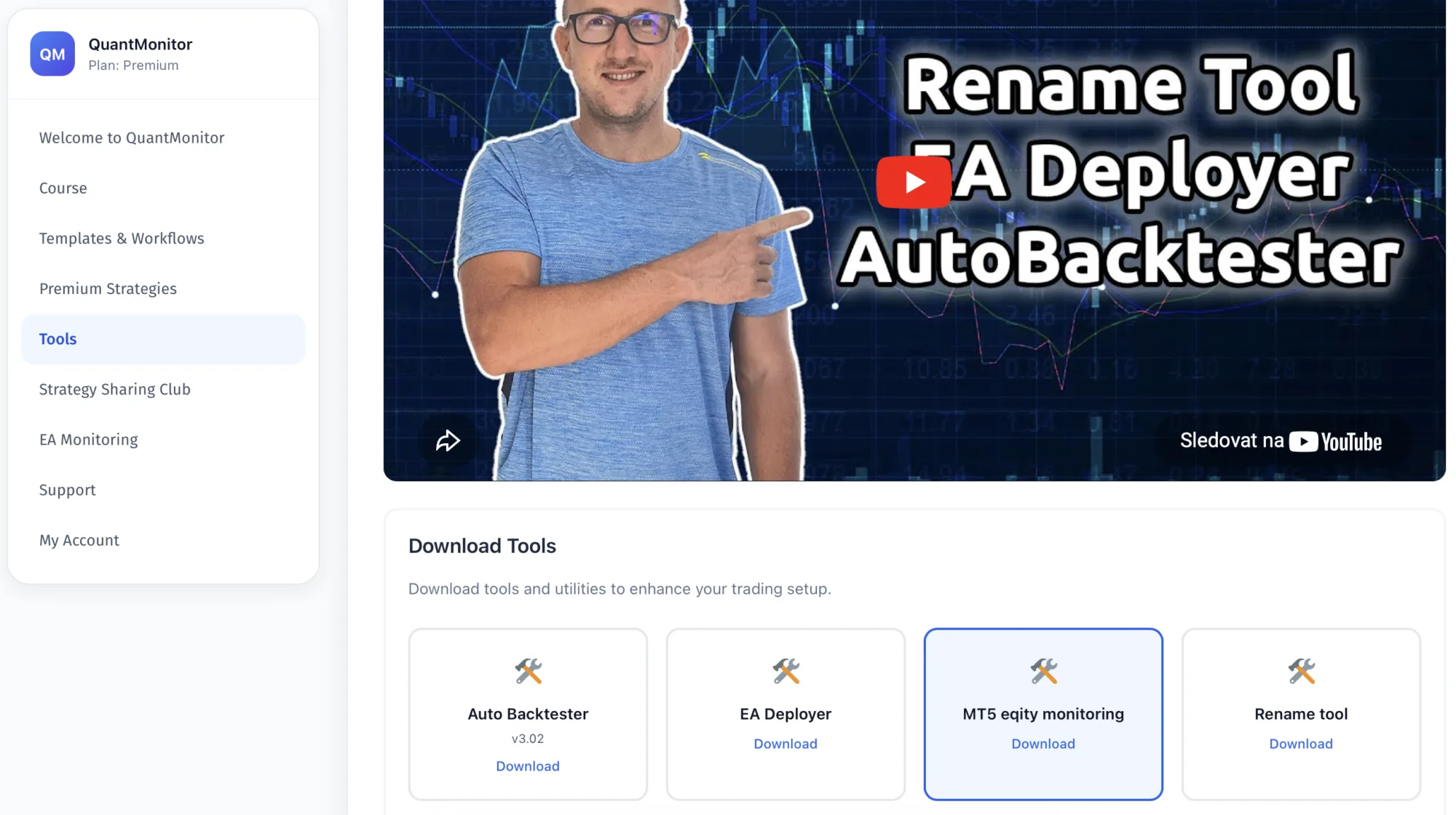
In the Premium section, members will also get access to:
- a 46-page premium book on live trading
- the source codes of the tools
- the ability to modify the framework for their own needs
The premium book explains the logic behind the whole system: why a trader should understand not only entries and exits, but also system behavior, market regimes, robustness, monitoring, and real-world performance management.
That is the deeper philosophy behind this release. A trader should not run an EA as a black box. A trader should know how the EA works, how it reacts to different markets, and why it makes or loses money.
This new QuantMonitor release is designed to support exactly that kind of trading.