Trend + Volatility Filters With Keltner Channel and ATR
At QuantMonitor, we combine more than 30 years of collective experience in algorithmic trading, systematic research and portfolio engineering.
We are genuinely excited to share some of the techniques that have consistently proven valuable in our intraday trading models — especially when it comes to market regime filtering.
This article builds directly on our previous guides:
- How to Algorithmically Detect Market Regimes
- How to Identify Market Regimes and Filter Strategies by Trend and Volatility
Today, we move from theory to practice.
We will show you how to construct a robust intraday breakout strategy, adapted to market regime, using:
- Keltner Channel for trend confirmation
- ATR for volatility validation
- Highest-in-Range / Lowest-in-Range breakout levels for precise entries
- time-filtered entry windows
- ATR-scaled stops and profit targets
- strict end-of-day flattening
This is the same methodology we use in several of our internal trading systems.
1. Why Market Regimes Matter in Intraday Trading
Intraday strategies fail for two main reasons:
- They trade when the market is not moving.
- They trade against the prevailing trend.
Traditional breakout systems often produce false signals during:
- low volatility periods,
- tight consolidation ranges,
- counter-trend pullbacks,
- intraday noise around session opens.
Market regime filters solve this problem by forcing the strategy to wait for the right type of environment before placing any orders.
Our framework uses two highly efficient regime filters:
2. Trend Filter: Keltner Channel (KC)
The Keltner Channel identifies directional pressure.
In this strategy, a long environment is only valid when:
The bar opens below the upper Keltner band.
This simple condition provides two advantages:
- It confirms trend direction without requiring a moving average crossover.
- It prevents entries during overextended spikes, where breakouts typically fail.
For short trades, the strategy uses a symmetric trend condition based on price structure and range behavior.
The result:
the system trades with the trend, not against it.
3. Volatility Filter: ATR Thresholds
Volatility is the fuel of breakout strategies.
To avoid flat markets, the system requires ATR to exceed a predefined threshold.
If ATR is too low → no trades.
If ATR is high enough → the system becomes active.
This prevents entries during:
- narrow sessions
- holiday markets
- lunch-hour stagnation
- slow Asian ranges
- unusually low volatility periods
By combining KC trend + ATR volatility, the strategy activates only when movement is both directional and strong enough to justify a breakout.
4. Entry Logic: Highest/Lowest Range Breakout
Once the market is in the correct regime, we look for a structural signal — not just a bar pattern.
The key:
entries are placed at Highest-in-Range or Lowest-in-Range levels, using stop orders.
This means:
- No chasing candles
- No guessing
- No premature entries
- Only trading when price breaks a real structural boundary
This dramatically improves the quality of entries and reduces noise.
5. Intraday Time Filters
The strategy trades only during predefined windows, such as:
- evening breakout windows for long trades
- late-night / early-session windows for short trades
- strict end-of-day exit
By forcing the system to close positions every evening, we reduce:
- overnight gaps
- news risk
- spread jumps
- session-to-session volatility discontinuities
This creates a cleaner, more stable performance profile.
6. ATR-Based Stops, Targets and Trailing Logic
Every protective and profit-taking mechanism is based on ATR:
- Stop Loss = ATR × coefficient
- Take Profit = ATR × coefficient
- Trailing Stop = ATR × coefficient
ATR scaling ensures:
- stops adjust to volatility
- targets remain realistic
- trailing logic is proportional to current market conditions
- the strategy works across multiple symbols without retuning
This is one of the major advantages of volatility-adaptive systems.
7. Results: Performance & Statistical Stability
We backtested the strategy using 99% tick-quality data with more than:
- 9.8 million ticks
- 207,318 bars
- 4,832 executed trades
Net Profit:
9,807.20
Profit Factor:
1.27
Sharpe Ratio:
3.82
Z-Score:
–1.87 (93.85%)
LR Correlation:
0.98
Maximum Equity Drawdown:
1,978.72
For an intraday breakout strategy, these are exceptionally stable metrics.
The system exhibits:
- smooth, near-linear equity growth
- short and shallow drawdowns
- no catastrophic loss clusters
- excellent trade distribution
- strong statistical independence between trades
The win rate is 46.52% — fully expected for a high-RR breakout model — with average winners of 40.60 and average losers of –27.64, maintaining a strong positive expectancy.
8. Get the Code
To keep this article focused on methodology, we are not publishing the full source code here.
However:
MT5 version of the strategy:
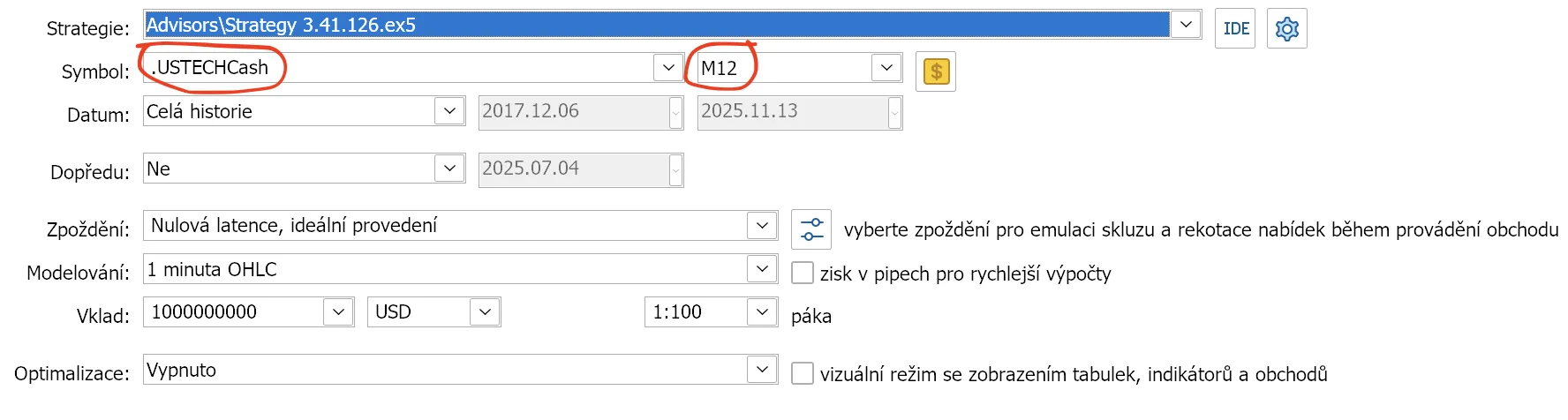
is available free for all registered QuantMonitor users.
StrategyQuant / AlgoWizard version
including a detailed breakdown of every block, condition and signal,
is available inside the Premium Dashboard together with the full educational module.
You will find:
- complete AW project file
- block-by-block explanation
- parameter mapping
- volatility/trend filter integration
- entry/exit logic
9. Conclusion
This intraday breakout model demonstrates how powerful market regime filtering can be when applied correctly.
By combining:
- Keltner trend confirmation,
- ATR volatility thresholds,
- structural breakout levels,
- intraday session logic,
- ATR-scaled stops and targets,
- and strict risk control,
…you create a strategy that adapts naturally to different market conditions and maintains stable performance over many years.
If you want to learn more, explore the code, or build your own variations, join us at QuantMonitor.net and access the full StrategyQuant project inside the Premium Dashboard.