A trading system isn't a signal you discover — it's an architecture you assemble from parts. Change the question from "when do I buy?" to "what are the pieces, and does each one hold up on its own?" and the whole job changes with it. That's not philosophy for its own sake; it's exactly how we build every strategy at QuantMonitor, in StrategyQuant.
The idea isn't new — systematic traders have thought in modules since the early platform era. What's changed is that the tools finally make it practical: a strategy is composed from building blocks, not stumbled upon. This is the way of thinking behind everything in our strategy database and our live portfolio.
Stop hunting for the perfect signal
The most common mistake is treating a system as a search for a better entry. A signal is an event — "the oscillator crossed zero." A process is a system of constraints: under what conditions does this idea make sense, when should it stand aside, and what invalidates the premise? StrategyQuant forces you to answer those explicitly, because every rule has to survive translation into logic. Vague intuition can't hide behind "experience" — it either becomes a testable rule or it goes.
The four modules of a system
Every strategy we build breaks into four parts, each with its own job, its own failure modes, and its own test.
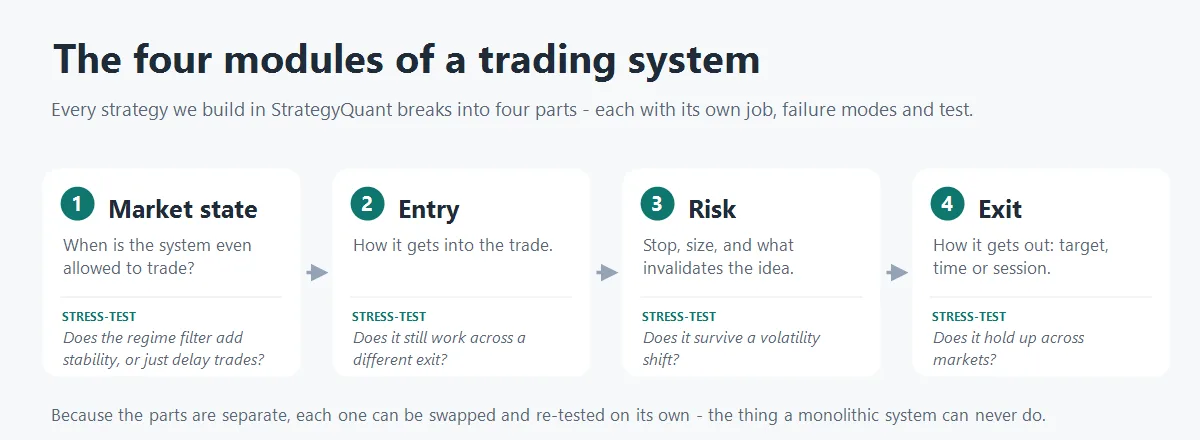
Splitting a system this way lets you ask questions a monolithic strategy can't answer: does this entry still work with a different exit? Does this risk model survive a volatility shift? Does this market-state filter add stability, or just delay trades? In StrategyQuant you change one block and re-test — the other three held constant. That's the whole point of modularity: you can improve or retire one part without rebuilding the machine.
A real modular strategy
Take one from our database — the GBPJPY Awesome Oscillator Reversal Breakout (a free strategy). Read it as four blocks:
- Market state / signal — the Awesome Oscillator crossing its zero line flags a momentum flip.
- Entry — a STOP order at the recent highest/lowest close, so price has to confirm the move before you're in.
- Risk — a stop of 3.3 × ATR(22) and a 280-pip target define the invalidation up front.
- Exit — order validity of 21 bars and a Friday close, so nothing lingers into the weekend.
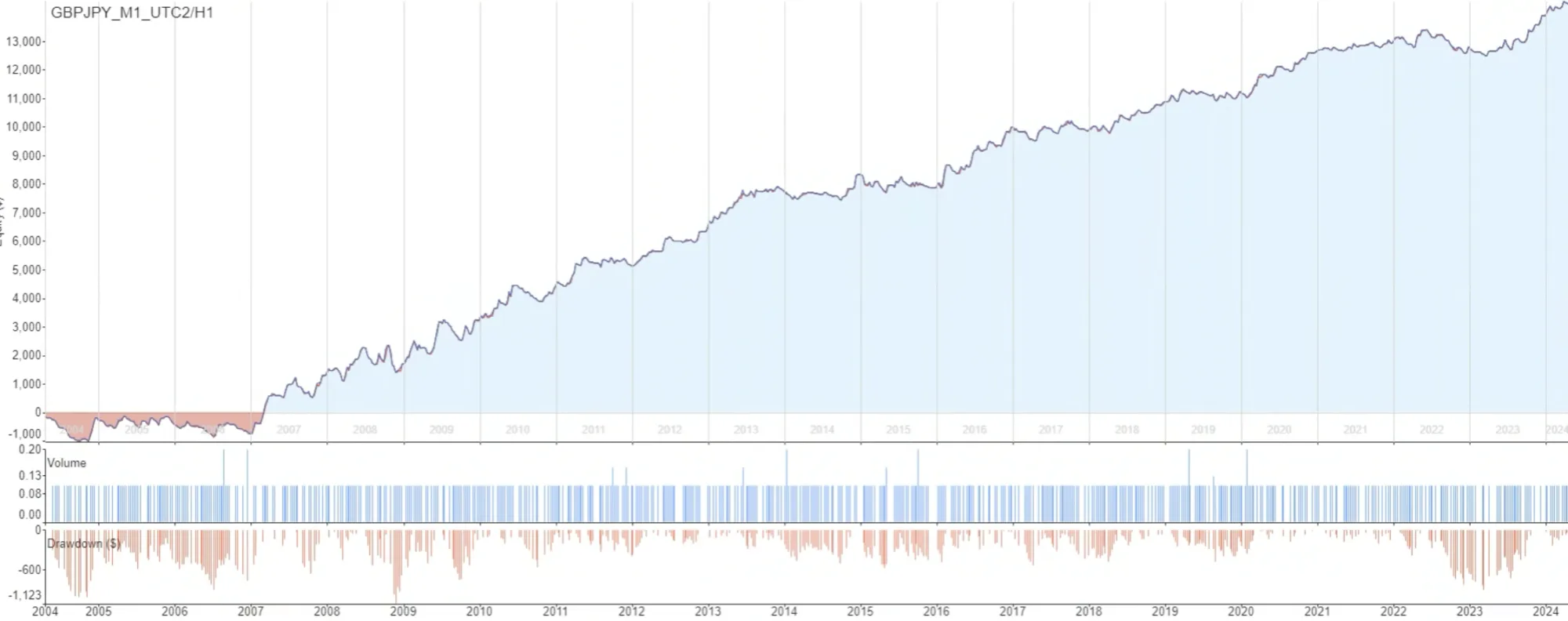
Four blocks, each replaceable, each measurable. Its headline profit factor is 1.45 across two decades of tick data — but the number matters less here than the structure: because the parts are separate, we know which one to touch when the market changes.
Market state is the first module, not an afterthought
Markets aren't a homogeneous stream of opportunity. We label them by regime — trend, from the slope of the 50-period moving average, and volatility, from ATR relative to its own recent average — and a system is only "on" when its assumptions hold. A breakout module that sits out a choppy, falling market isn't broken; it's disciplined. Inactivity is a feature.
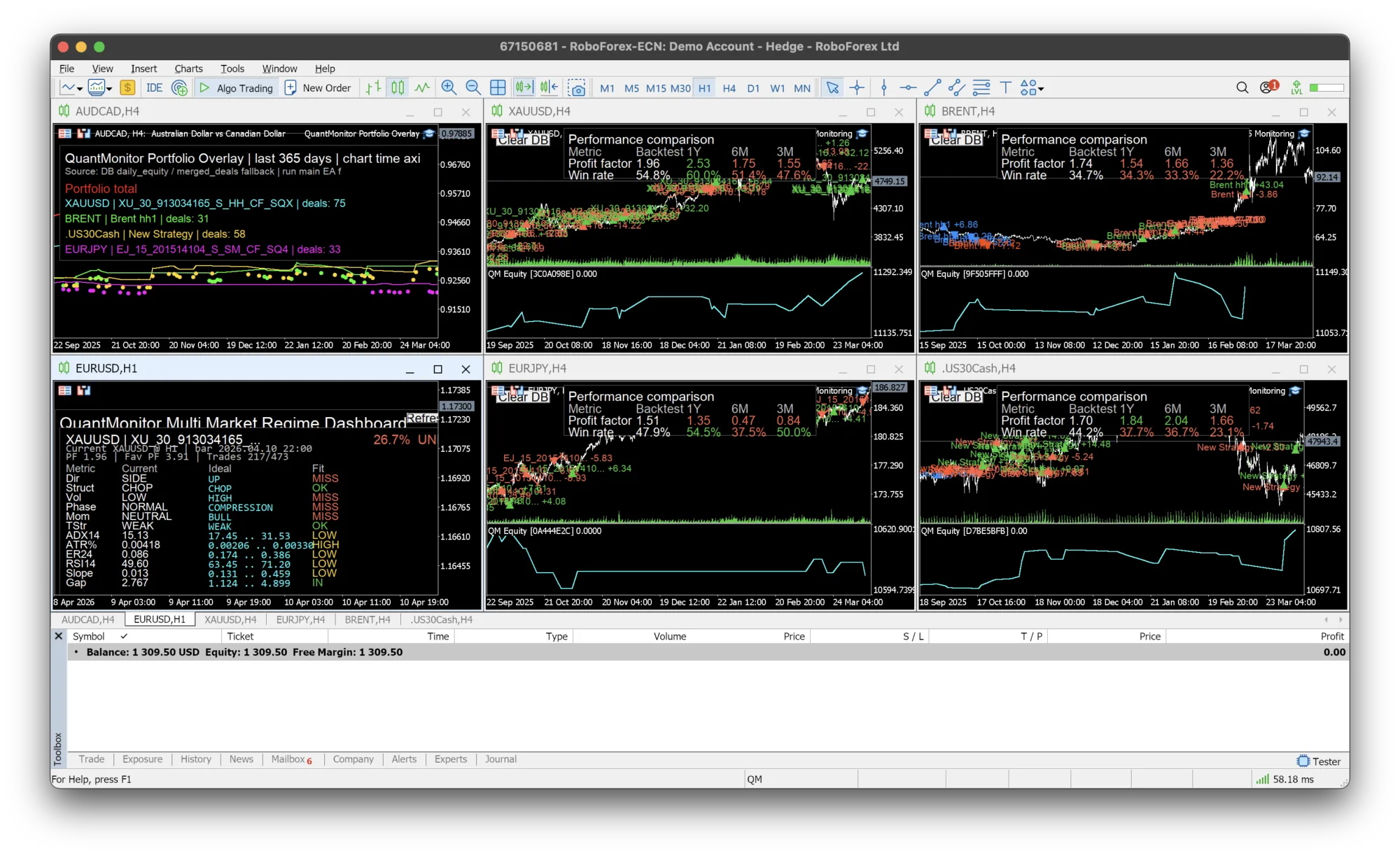
This is why our regime work exists — see how we identify regimes by trend and volatility. The market-state module decides whether the other three modules are even allowed to act today.
Robustness over peak returns — and drawdowns as diagnostics
We don't chase the sharpest backtest. A single spectacular optimum usually means the strategy is curve-fit to history; we look for flat regions that survive parameter changes, out-of-sample data and different markets. That's what StrategyQuant's robustness tests are for, and it's why we judge a strategy by profit factor and stability, not a peak equity high.
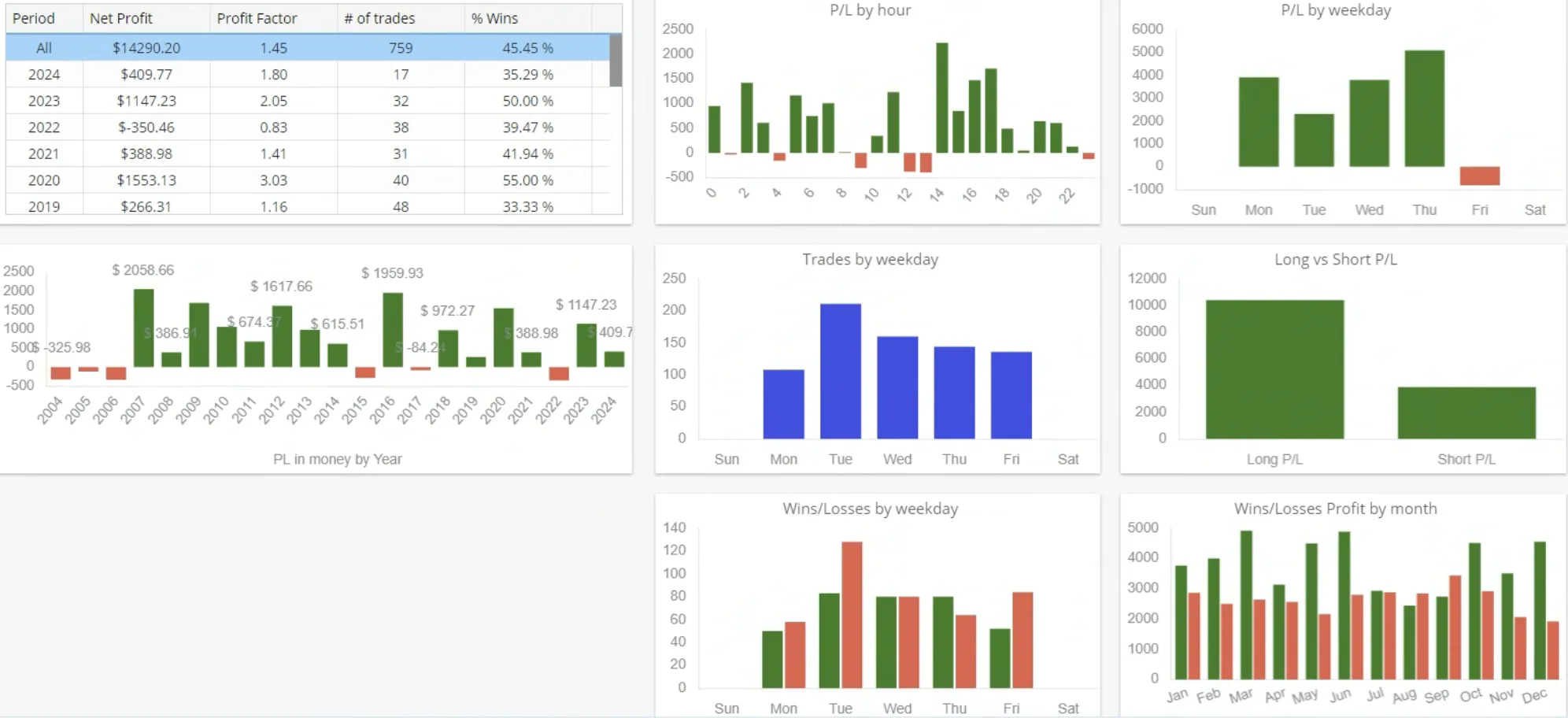
When a strategy hits a losing stretch, the modular structure pays off again: a drawdown is a diagnostic, not a failure. Which module's assumption broke — did the regime change, did volatility outrun the risk block? We retire a system when it loses structural relevance, not simply when it loses money.
You can't reuse the same blocks blindly
A stop, a spread or a target that's right for a forex pair is wrong for gold, an index or crypto. Modularity doesn't mean copy-paste — it means normalising each block to the market before you build. It's why we wrote up why fixed SL, TP and trailing stops must be normalised per market in StrategyQuant, and why, before generating a single BTCUSD strategy, we normalised its spread and cleaned its data first.
Modularity is what makes a portfolio
Single systems are fragile. The real payoff of building in modules is that you can combine strategies that fail in different conditions across structurally different markets — XAUUSD, .US30Cash, BRENT and EURJPY today, with BTCUSD in testing. Diversity of structure matters more than diversity of instruments: two trend systems on two pairs still break together; a breakout and a mean-reversion module, on markets driven by different forces, don't.
A system is an interpretation, not a prediction
That's the thread through all of it. A trading system doesn't predict the future — it interprets market structure and acts only where its assumptions hold. Build it from parts you can test in isolation, and you can adapt one module when conditions shift instead of throwing the whole thing away. Markets change; robust modular design is how you change with them. It's why we build every QuantMonitor strategy this way.
Your move: take a system apart
Here's the challenge: pick one strategy you already run and split it into its four modules — market state, entry, risk, exit. Test each one on its own. The moment you can say which block is carrying the edge and which is just delaying trades, you've stopped guessing and started engineering.
Your next robust system is four testable modules away. Take the step.
For illustrative and educational purposes only — not financial advice. Backtested and hypothetical results have inherent limitations, and profit factor reflects historical tick-data testing. Trading forex and CFDs carries substantial risk; you could lose all or more than your initial investment. Past performance is not necessarily indicative of future results.